Work / manufacturing
PDM and ERP: which system owns which part
Engineering works in a PDM vault, everyone else in the ERP. Splitting ownership - purchased parts mastered in the ERP, made parts and structures in the vault - and the harder question of what happens to the manufacturing BOM on the next import.
- Client
- Mid-sized discrete manufacturer
- Industry
- manufacturing
- Services
- ERP, Data
- Stack
- PDM, Mid-market ERP
- Period
- ongoing
Context
Engineering designs in CAD and keeps parts and assemblies in a PDM vault. Purchasing, production and stock run in the ERP. Both systems hold items; both want to be the master. Without a decision, the same purchased screw gets created twice, and a new revision in the vault never reaches the shop floor.
What I do
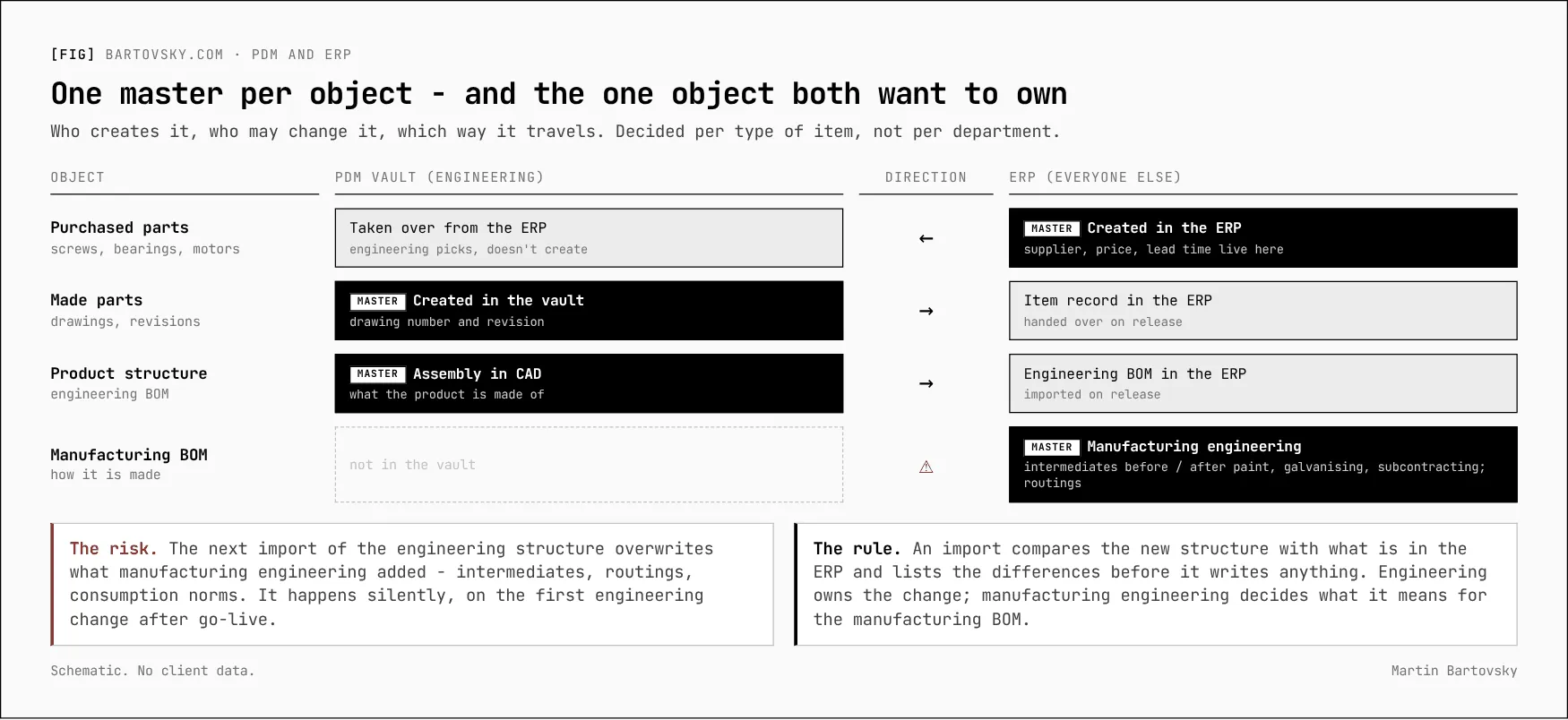
Ownership, decided per item type. Purchased parts are mastered in the ERP - the vault takes them from there. Made parts and the product structure are mastered in the vault - it hands them to the ERP. One owner for each, so there is always one answer to “where do I change this?”.
Item groups for purchased components. Built from an analysis of the vault export, so the groups match what engineering actually uses, with new blocks where purchased components had no place.
The open problem: the manufacturing BOM. The vault hands over an engineering structure. Production needs more: a separate item before and after painting, galvanising or subcontracting - two states of a part can’t sit in stock under one number. Manufacturing engineering adds those, plus routings. The risk is obvious: the next import from the vault overwrites their work. This is being solved as a lifecycle question - who changes what, and how a change from engineering is compared with what’s already in the ERP before anything is written.
Why it matters
The ownership rule takes an afternoon to agree and saves years of duplicate items. The BOM lifecycle takes longer - which is why it belongs before go-live, not after the first engineering change. I wrote up the reasoning in a series of notes on BOMs.
[->] next step
Where do your numbers stop adding up?
Start with a short call. Bring one report nobody trusts - I'll trace it back to where the data gets captured.